
Arthroscopy Surgery in Kollam for Knee Injuries and Recovery
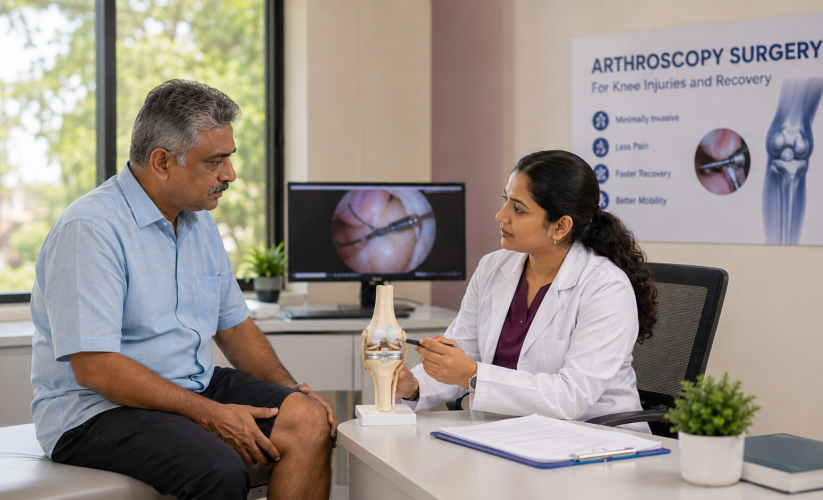
Knee injuries from sports, falls, or gradual wear are among the most common reasons people in Kerala consult an orthopaedic specialist, and arthroscopy surgery in Kollam has become one of the more commonly discussed treatment options for these cases. Because it is minimally invasive compared to open surgery, many patients want to understand exactly what it involves before deciding whether it applies to their situation.
Not every knee injury requires arthroscopy, and that distinction matters. This article explains what the procedure involves, which knee problems it is typically used for, and what recovery looks like afterward.
Understanding Arthroscopy Surgery
Arthroscopy is a minimally invasive surgical technique that uses a small camera, called an arthroscope, inserted through a tiny incision to examine and treat problems inside the knee joint. Because the incisions are small, it generally involves less tissue disruption than traditional open surgery.
In short: arthroscopy allows a surgeon to view, diagnose, and often treat internal knee problems through a few small cuts rather than one large incision, which typically supports a quicker initial recovery. Anyone exploring whether this approach fits their injury can start by discussing it with Orthopaedics, where the joint can be assessed alongside imaging results before a treatment plan is confirmed.
Common Knee Injuries Treated with Arthroscopy Surgery in Kollam
Arthroscopy is used for a range of knee problems, particularly when non-surgical treatment has not resolved symptoms. Common conditions include:
- Torn meniscus, one of the most frequent reasons for knee arthroscopy
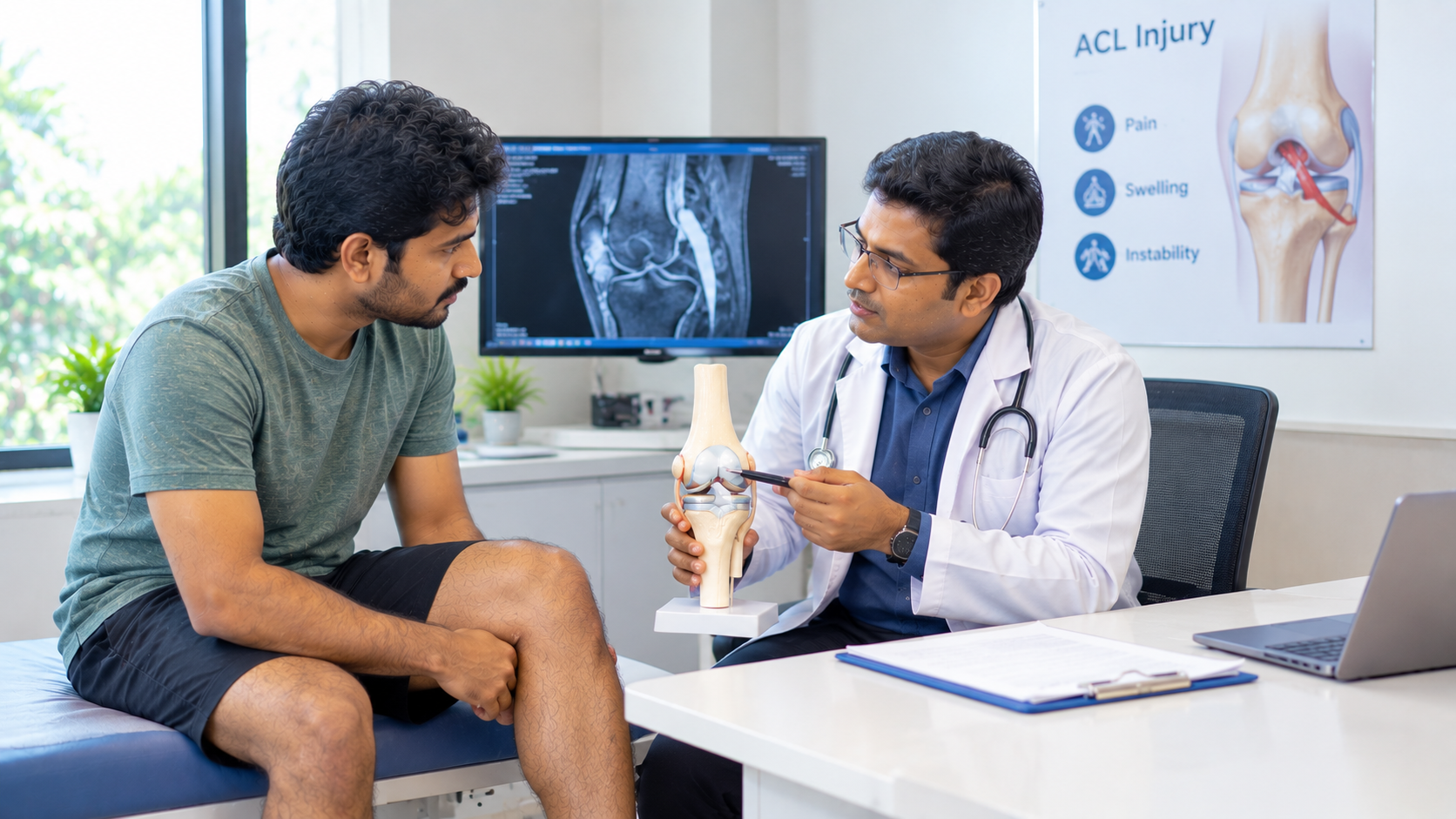
- Anterior cruciate ligament (ACL) tears or partial tears
- Loose cartilage fragments causing catching or locking sensations
- Persistent swelling or pain following a sports injury or fall
- Removal of inflamed joint lining in certain cases of arthritis
For many patients, arthroscopy surgery in Kollam is considered once an MRI or clinical examination confirms a structural issue that is unlikely to improve with rest and physiotherapy alone.
Causes and Risk Factors for Knee Injuries
Knee injuries requiring arthroscopy often result from sudden twisting movements, direct impact during sports, or repetitive strain over time. Age-related cartilage thinning can also make the meniscus more prone to tearing, even from relatively minor movements. In addition, previous knee injuries, weak surrounding muscles, and certain physically demanding occupations can increase the likelihood of needing evaluation for a joint problem, which is often when arthroscopy surgery in Kollam is first discussed as a possible treatment path.
When to Consult a Specialist
Persistent knee pain, swelling that does not settle within a few days, a locking or catching sensation, or a feeling of the knee giving way are all reasons to seek a specialist opinion rather than waiting. Early evaluation often allows for a wider range of treatment options, since some injuries become harder to manage the longer they are left unaddressed.
Diagnosis and Imaging
Diagnosis usually begins with a physical examination to assess joint stability and range of motion. Because internal knee structures are not visible externally, further evaluation through Radiology, typically an MRI or X-ray, is often needed to confirm the exact nature and extent of the injury before arthroscopy surgery in Kollam is recommended as a treatment path.
Preparing for Surgery
Once arthroscopy is confirmed as the appropriate treatment, patients typically undergo routine pre-surgical checks, including blood tests and a review of overall health. As part of this process, a consultation through Anesthesiology helps determine the most suitable anaesthesia approach, which for many arthroscopy procedures may be a regional block rather than full general anaesthesia, depending on the individual case.
Matha Medical Centre guides patients through each of these preparation steps in advance, so there is clarity around what to expect on the day of the procedure.
Recovery After Arthroscopy Surgery
Recovery from arthroscopy surgery in Kollam is generally shorter than recovery from open knee surgery, though the exact timeline depends on the specific procedure performed. Many patients are able to bear some weight on the leg within a day or two, while a full return to sports or physically demanding activity may take several weeks.
Structured rehabilitation through Physiotherapy plays a significant role in regaining strength, flexibility, and confidence in the joint. Consistent, guided exercises help reduce stiffness and support a more complete recovery, especially in the weeks immediately following surgery.
Conclusion
Deciding on arthroscopy surgery in Kollam usually follows a period of persistent knee symptoms that have not improved with rest or conservative treatment. If you are dealing with ongoing knee pain, swelling, or instability, it is worth having the joint properly evaluated rather than continuing to manage it on your own. You can reach out through Matha Medical Centre to discuss your symptoms with the orthopaedic team.
To arrange a consultation in Kollam, you can Contact Us directly.
According to the NHS, knee arthroscopy is generally considered a safe and effective procedure for diagnosing and treating a range of joint problems, though outcomes depend on the specific condition being treated.
Frequently Asked Questions
1. What is knee arthroscopy used for?
Knee arthroscopy is commonly used to diagnose and treat conditions such as torn meniscus, ligament injuries, loose cartilage fragments, and persistent joint swelling. It allows a surgeon to examine and often treat the joint through small incisions rather than open surgery.
2. How long does recovery take after arthroscopy surgery?
Recovery timelines vary depending on the procedure performed, but many patients bear some weight within a day or two and continue physiotherapy for several weeks. A full return to sports or strenuous activity may take longer, based on individual healing.
3. Is arthroscopy surgery in Kollam suitable for all knee injuries?
Not every knee injury requires arthroscopy. It is generally considered when non-surgical treatments have not resolved symptoms, or when imaging confirms a structural problem that is unlikely to improve on its own. A specialist evaluation helps determine suitability.
4. What kind of anaesthesia is used for knee arthroscopy?
This depends on the individual procedure and patient health, and may involve a regional block or general anaesthesia. An anaesthesia consultation before surgery helps determine the safest and most suitable approach for each patient.
5. When should I see a doctor for a knee injury?
Persistent pain, swelling lasting more than a few days, a locking sensation, or a feeling of the knee giving way are signs that warrant a specialist evaluation. Early assessment often allows for a broader range of treatment options.

6 Comments
So,I like it
An Engaging Blog Post
Aw, this was a very nice post. In idea I wish to put in writing like this moreover – taking time and precise effort to make an excellent article… however what can I say… I procrastinate alot and by no means appear to get something done.
Ютуб – Зрители прямой трансляции – Самые дешевые – Смотрят 120 минут – цена за 500 просмотров
Разогретый Gmail с 2FA, App-Password и 10 резервными кодами. Возраст: 6-7 лет
Аккаунты Threads