
Diabetic Foot Care in Kerala: Early Warning Signs and When to See a Specialist
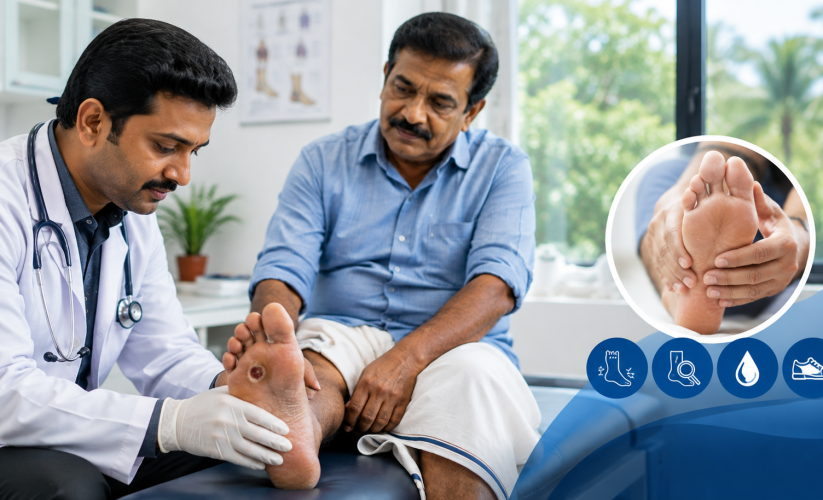
Diabetes affects a large and growing number of families across Kerala, and one of its most overlooked complications is foot damage. Good diabetic foot care in Kerala is not just about comfort. It is about preventing infections, ulcers, and in serious cases, permanent damage that can affect mobility and quality of life.
Many people manage their blood sugar carefully but forget that diabetes can quietly affect the nerves and blood vessels in the feet long before any obvious symptoms appear. This article explains what happens to the feet in diabetes, the early warning signs to watch for, and when it is time to consult a doctor rather than wait it out.
Understanding How Diabetes Affects the Feet
Diabetes can damage small nerves over time, a condition known as diabetic neuropathy. This often leads to reduced sensation in the feet, so a person may not notice a cut, blister, or burn right away. At the same time, diabetes can narrow blood vessels and reduce circulation, which slows healing and makes even minor wounds harder to recover from.
In short: high blood sugar over months or years can leave the feet less able to feel injury and less able to heal from it, which is why small problems can turn serious quickly if ignored.
Why Diabetic Foot Care in Kerala Matters More During Monsoon Season
Kerala’s humid climate and heavy monsoon rains create extra challenges for anyone managing diabetes. Wet footwear, prolonged dampness, and increased exposure to fungal and bacterial organisms all raise the risk of skin breakdown and infection. As a result, diabetic foot care in Kerala often needs a seasonal approach, with extra attention to dryness and hygiene between June and September, and again during the shorter northeast monsoon later in the year.
For someone with reduced sensation in the feet, a minor scrape picked up while walking through a puddle can go unnoticed for days. In addition, humidity can make existing wounds slower to close, so what starts as a small blister can, over time, become a more stubborn ulcer.
Early Warning Signs and Symptoms to Watch For
Recognising problems early is one of the most effective ways to avoid complications. Common warning signs include:
- Numbness, tingling, or a burning sensation in the feet or toes
- Skin that looks unusually dry, cracked, or discoloured
- Swelling that does not go down after rest
- Cuts, blisters, or sores that are slow to heal
- A foul smell or discharge from a wound
- Changes in foot shape or persistent pain while walking
Because nerve damage can dull pain signals, some of these changes may not hurt at all, which is exactly why regular visual checks matter more than relying on how the foot feels. Persistent skin changes, unusual dryness, or slow-healing sores can also be evaluated through Dermatology when the skin itself needs closer attention.
Causes and Risk Factors
Several factors increase the likelihood of diabetic foot problems, including long-standing or poorly controlled blood sugar, smoking, high blood pressure, high cholesterol, and a history of previous foot ulcers. Because these cardiovascular risk factors often overlap with foot complications, related heart concerns can also be reviewed through Cardiology as part of a broader risk assessment. Ill-fitting footwear and walking barefoot, which is still common in many Kerala households, can also raise the risk of unnoticed injury. Age and the duration of diabetes both play a role as well, since nerve and circulation changes tend to develop gradually.
When to See a Doctor
Any wound, blister, or area of redness on the foot that does not start improving within a day or two should be checked by a doctor rather than treated at home. Other signs that call for prompt medical attention include increasing pain, spreading redness, fever, or a wound that appears to be getting deeper or wider. Early evaluation is one of the simplest ways to prevent a manageable issue from becoming a serious infection.
If you manage diabetes and notice any of the symptoms mentioned above, General Medicine can assess your foot health alongside your overall diabetes management, rather than treating it as a separate concern.
Diagnosis and Treatment Options Available
At Matha Medical Centre, diabetic foot concerns are approached as part of overall diabetes care rather than in isolation. A typical evaluation may include a physical examination of the feet, a check of circulation and nerve sensitivity, and blood sugar assessment. Depending on the findings, treatment can range from wound cleaning and dressing to medication for infection, and referral for further specialist input when needed.
Because diabetes can also affect the kidneys, patients with foot complications are often encouraged to have related risk factors reviewed. Signs of reduced kidney function can be assessed through Nephrology, since kidney health and circulation problems often develop together in long-standing diabetes. This connected approach reflects how diabetic foot care in Kerala works best when it is part of a wider health picture rather than a single, isolated visit.
Prevention and Daily Foot Care Tips
Most diabetic foot complications are preventable with consistent daily habits. A few practical steps include:
- Check both feet every day, including between the toes, for cuts, blisters, or colour changes
- Wash feet daily with mild soap and lukewarm water, and dry thoroughly, especially between the toes
- Moisturise dry skin, but avoid applying cream between the toes where it can trap moisture
- Wear well-fitting, closed footwear rather than walking barefoot, particularly during the rainy months
- Trim toenails carefully and straight across to avoid ingrown nails
- Keep blood sugar levels within the range advised by your doctor
- Schedule a routine foot check as part of your regular diabetes follow-up
Consistent diabetic foot care in Kerala, built into a daily routine rather than treated as an occasional task, makes a meaningful difference in preventing complications over time.
Conclusion
Diabetic foot problems rarely appear overnight. They tend to build up quietly through reduced sensation and slower healing, which is exactly why regular checks and prompt attention to small changes matter so much. If you or a family member living with diabetes has noticed any of the warning signs discussed here, it is worth having it reviewed at Matha Medical Centre in Kollam rather than waiting for it to resolve on its own. You can Contact Us to arrange a consultation or book an appointment with the General Medicine team in Kollam.
Frequently Asked Questions
1. What are the first signs of diabetic foot problems?
Early signs often include numbness, tingling, dry or cracked skin, and slow-healing cuts or blisters. Because diabetes can reduce sensation in the feet, these changes are sometimes noticed visually before they are felt. Anyone with diabetes who spots such changes should have their feet examined by a doctor.
2. Why is diabetic foot care in Kerala especially important during monsoon season?
Kerala’s humidity and heavy rainfall increase the risk of fungal infections and slow wound healing, particularly for people with reduced foot sensation. Keeping feet dry, wearing closed footwear, and checking for injuries daily becomes even more important during wet months to avoid complications.
3. How often should a person with diabetes check their feet?
A daily visual check is recommended, looking closely at the soles, heels, and areas between the toes for cuts, redness, swelling, or dryness. This habit helps catch minor issues before they progress, especially since nerve damage can make injuries harder to feel.
4. When should someone with diabetes see a doctor for a foot issue?
Any wound that has not improved within a day or two, spreading redness, increasing pain, fever, or a foul odour from a sore all warrant prompt medical evaluation. Waiting can allow a minor issue to develop into a more serious infection.
5. Can diabetic foot complications be prevented?
Many cases can be prevented through daily foot checks, proper footwear, good hygiene, and consistent blood sugar management. Regular follow-up with a doctor as part of ongoing diabetes care also helps identify early changes before they become serious problems.



1 Comment
llob7l