Spine Specialist in Kollam for Back Pain and Slipped Disc
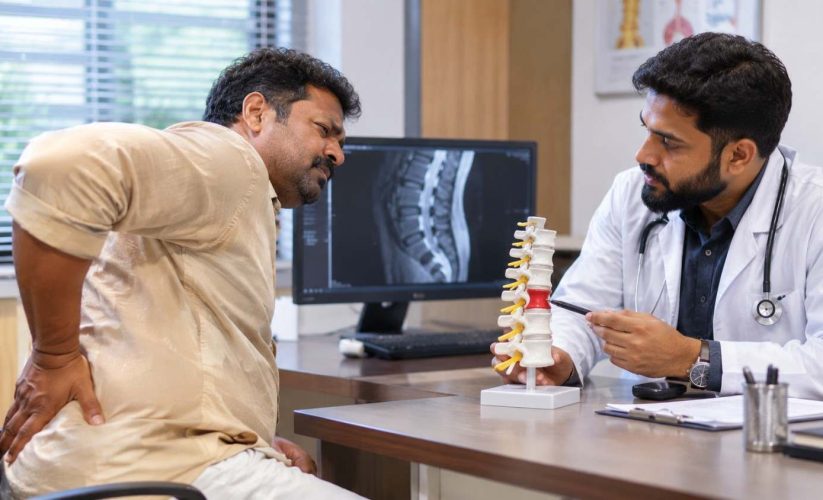
Back pain can affect walking, sleep, work, and everyday activities. When pain persists, travels into a leg, or occurs with tingling or weakness, an assessment can help identify the cause. A spine specialist in Kollam can evaluate whether symptoms are related to a slipped disc, nerve irritation, muscle strain, or another spinal condition.
Not every episode of back pain is caused by a slipped disc, and not every disc problem needs surgery. The next step depends on symptoms, examination findings, and whether nerves are affected.
When should you consult a spine specialist in Kollam?
Consider consulting a spine specialist in Kollam when back pain does not improve, keeps returning, or affects daily activities. An assessment is also important when pain spreads into the buttock, thigh, calf, or foot.
Arrange a review for persistent pain, tingling or numbness in a leg, leg or foot weakness, or symptoms after an injury. These signs do not confirm a slipped disc. A clinician can assess the pattern and decide whether further investigation is needed. Learn about bone, joint, muscle, and spine-related care through the Orthopaedics Department.
What is a slipped disc?
A slipped disc, also called a herniated or prolapsed disc, occurs when material from an intervertebral disc pushes through its outer layer. Discs sit between the spinal bones and help absorb load during movement. If the material irritates a nearby nerve, it may cause pain, tingling, numbness, or weakness.
In the lower back, nerve irritation can cause sciatica, pain that travels from the lower back or buttock into the leg. A scan showing a disc bulge does not automatically prove that it is causing pain. A spine specialist in Kollam considers scan findings alongside symptoms and examination.
Which symptoms may indicate a disc or nerve problem?
A lumbar disc problem may cause:
- Lower back pain: Pain that affects movement or everyday activities.
- Leg pain or sciatica: Pain travelling from the lower back or buttock into one leg, sometimes reaching the calf or foot.
- Nerve-related symptoms: Pins and needles, numbness, or muscle weakness.
Similar symptoms can have other causes, so pain location alone cannot confirm a slipped disc. If symptoms persist or worsen, a spine specialist in Kollam can check strength, sensation, reflexes, walking, and spinal movement to assess possible nerve involvement.
When is back pain an emergency?
Seek emergency medical care if back pain occurs with new difficulty passing urine, loss of bladder or bowel control, numbness around the genitals or anus, or severe or worsening weakness in both legs. These may indicate serious nerve compression, including cauda equina syndrome. Do not wait for a routine appointment if these symptoms develop.
How is a slipped disc diagnosed?
Diagnosis starts with a review of symptoms, medical history, and previous injuries. The examination may include spinal movement, walking, leg strength, sensation, and reflexes.
An MRI may be recommended when symptoms and examination findings make imaging useful. It shows discs and nearby nerves, but it is not needed for every person with back pain. Disc changes can also appear in people without symptoms, so scan findings must be considered alongside the clinical assessment.
Read the American Academy of Orthopaedic Surgeons guide to herniated discs. A spine specialist in Kollam can explain whether imaging is appropriate and what the results mean.
What treatment options are available for a slipped disc?
Treatment depends on symptom severity and whether nerve function is affected. Options may include:
- Non-surgical care: Appropriate pain relief and activity modification.
- Physiotherapy: Guided exercises to support movement and recovery.
- Surgery: May be considered when symptoms remain severe despite appropriate treatment or when nerve dysfunction is significant or worsening.
Many people improve with non-surgical care. Prolonged bed rest is generally not advised for uncomplicated back pain. Gentle movement within tolerable limits can help maintain mobility. A spine specialist in Kollam can explain the benefits, risks, and alternatives for the individual case.
Can physiotherapy help with back pain and a slipped disc?
Physiotherapy can help improve movement, strength, flexibility, and confidence with daily activities. Exercises should be tailored to symptoms and adjusted if they cause increased pain or new symptoms. Physiotherapy does not replace urgent assessment when warning signs are present.
A spine specialist in Kollam may recommend physiotherapy as part of a personalized treatment plan after assessing the patient’s back pain or slipped disc condition. Learn more about the Physiotherapy Department.
Where can you seek spine-related care in Kollam?
People with persistent back pain or possible slipped disc symptoms can seek an assessment through the Orthopaedics services at Matha Medical Centre. The department lists care for bone, joint, muscle, and spine-related conditions.
When choosing a spine specialist in Kollam, ask what the assessment involves, whether imaging is necessary, and which non-surgical options may be suitable. Bring previous scan reports and prescriptions if available. Matha Medical Centre recommends clinical assessment rather than relying only on online symptom descriptions.
Conclusion
Persistent back pain, leg pain, tingling, numbness, or weakness deserves medical assessment. A spine specialist in Kollam can help identify whether symptoms relate to a slipped disc or another condition. Many disc problems improve without surgery, but bladder or bowel changes, saddle-area numbness, or rapidly worsening weakness require emergency care.
Frequently Asked Questions
1. When should I see a spine specialist in Kollam for back pain?
A person should seek an assessment when back pain persists, repeatedly returns, limits daily activities, or travels into a leg. Tingling, numbness, or weakness also needs medical review. Sudden bladder or bowel changes, saddle-area numbness, or rapidly worsening leg weakness require emergency care, not a routine appointment.
2. Does every slipped disc require surgery?
No. Many people with a slipped disc improve with non-surgical care, such as appropriate pain relief, activity changes, and guided physiotherapy. Surgery may be considered when symptoms remain severe despite treatment or when nerve function is significantly or progressively affected. The decision depends on individual examination findings.
3. Can a slipped disc cause pain in the leg?
Yes. A disc in the lower back can irritate or press on a nearby nerve and cause sciatica. Pain may travel from the lower back or buttock down one leg. Tingling, numbness, or weakness may also occur, but other conditions can cause similar symptoms.
4. Do I need an MRI for lower back pain?
Not everyone with lower back pain needs an MRI. A clinician may recommend imaging when symptoms, examination findings, or the possibility of nerve compression make it useful. MRI findings should be interpreted alongside symptoms because disc changes can also occur in people who have no pain.
5. How can physiotherapy help with a slipped disc?
Physiotherapy may help improve movement, strength, flexibility, and ability to manage everyday activities. Exercises should be selected according to the person’s symptoms and physical capacity. A clinical assessment is important first, especially if pain travels down the leg or numbness and weakness are present.