Fracture Treatment in Kollam and When Surgery Is Needed
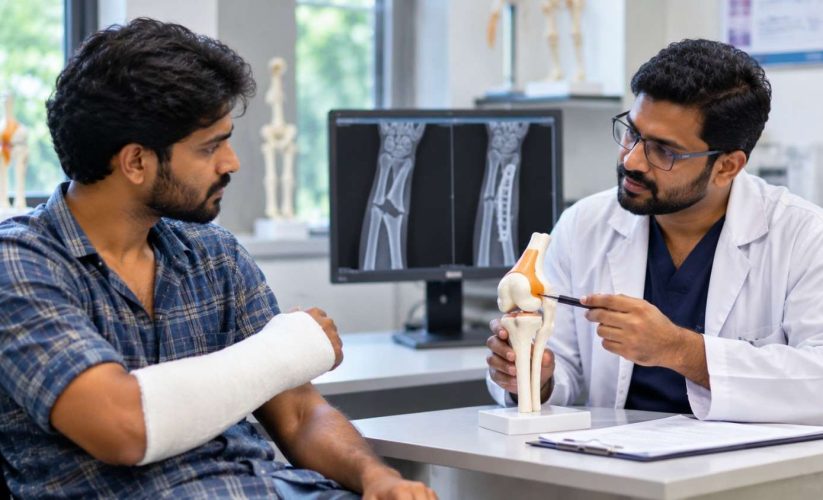
A fracture can happen after a road accident, a fall, a sports injury, or even a minor incident when bones are weakened. Pain, swelling, bruising, and difficulty moving the injured area may indicate a broken bone. If you or a family member has sustained an injury, finding appropriate fracture treatment in Kollam starts with a medical assessment to identify the type of fracture and determine how the bone should be treated.
Not every fracture requires surgery. Some broken bones heal with a cast or splint, while others need surgical fixation to keep the bone fragments in the correct position. Understanding these treatment options can help patients and caregivers make informed decisions about the next steps.
Where can you seek fracture treatment in Kollam?
Patients with a suspected fracture should seek medical attention, particularly when there is significant pain, swelling, tenderness, or difficulty using the affected limb. A visible change in the shape of an arm or leg, or an injury that makes standing or walking difficult, also needs prompt assessment.
For people seeking fracture treatment in Kollam, an orthopaedic assessment helps identify the location and severity of the injury and whether the broken bone can heal with external support or requires surgery. The Orthopaedics Department at Matha Medical Centre lists fracture management among its services.
What are the common signs of a broken bone?
A fracture may cause several symptoms around the injured area. Common signs include pain that increases with movement or pressure, swelling, bruising, tenderness, and difficulty moving or putting weight on the affected limb.
Some fractures are less obvious. A small crack or stress fracture may cause pain that develops gradually, particularly during activity. In other cases, the bone may be visibly deformed or an open wound may expose the injury.
An open fracture is particularly serious because the wound creates a risk of infection. If bone is visible or a wound is present near a suspected fracture, seek emergency medical care.
What should you do immediately after a suspected fracture?
The first priority is to avoid further injury while arranging medical assessment. Do not try to straighten a visibly deformed limb or push a bone back into place.
Follow these steps while waiting for medical help:
- Keep the injured area still: Avoid unnecessary movement. Support the limb in the position in which it was found, if possible.
- Protect the injury: Cover an open wound with a clean dressing. Do not press directly on exposed bone or attempt to clean a deep wound yourself.
- Arrange medical attention: Seek prompt care, especially after a serious fall, road accident, visible deformity, or suspected open fracture.
Avoid putting weight on an injured leg or using an injured arm until it has been assessed. If the person has severe bleeding, loss of consciousness, or signs of a serious injury, seek emergency assistance immediately.
How do doctors diagnose a fracture?
Diagnosis usually begins with questions about how the injury happened, where the pain is located, and whether the person can move the affected area. The clinician also examines swelling, tenderness, alignment, circulation, and sensation around the injury.
An X-ray is commonly used to confirm a fracture and show its location and pattern. Some injuries may need additional imaging when the X-ray does not provide enough information or when a more complex injury is suspected.
The findings help the orthopaedic team decide how the bone should be supported during healing. This assessment determines whether a cast, slab, or surgical fixation may be appropriate. Patients can read the American Academy of Orthopaedic Surgeons guide to fractures to understand more about broken bones and their treatment.
When does a fracture require surgery?
Surgery may be recommended when a fracture cannot be held in a suitable position with a cast or when the injury is too unstable to heal properly without fixation. The decision depends on the type of fracture, the amount of displacement, the affected bone, and any damage to surrounding tissues.
Surgical treatment may be considered in situations such as:
- Displaced or unstable fractures: The broken bone ends are significantly out of alignment or cannot be kept in position with a cast.
- Open fractures: The injury involves a wound that communicates with the broken bone, creating a risk of contamination and infection.
- Complex fractures: The bone is broken into several pieces, involves a joint, or has associated damage that requires surgical management.
Not every fracture involving these features follows the same treatment plan. The orthopaedic team assesses the injury and discusses the appropriate approach with the patient.
What happens during fracture surgery?
Fracture surgery aims to restore the bone’s alignment and keep the broken pieces stable while healing takes place. The procedure used depends on the bone involved and the pattern of the break.
In a procedure called open reduction and internal fixation, the surgeon repositions the bone fragments and holds them together using implants such as plates, screws, or rods. Some injuries may require external fixation, where pins connected to a frame outside the body help stabilize the bone.
The choice of implant and surgical technique is specific to the injury. Patients should discuss the expected benefits, possible complications, and recovery requirements with their treating orthopaedic team.
How long does a broken bone take to heal?
Fracture healing time varies according to the bone involved, the severity of the break, the patient’s age, general health, and whether complications develop. A simple fracture and a complex fracture may have very different recovery timelines.
After receiving fracture treatment in Kollam, patients may need follow-up appointments to check healing and confirm that the bone is maintaining its position. Follow instructions about weight-bearing, cast care, wound care, and returning to daily activities. Do not remove a cast or increase activity without medical advice.
Physiotherapy may be recommended when stiffness, reduced strength, or difficulty moving remains after the injury or treatment. The Physiotherapy Department provides rehabilitation services that may support recovery when included in the care plan.
Where can patients get orthopaedic fracture care in Kollam?
Patients looking for fracture treatment in Kollam can seek an orthopaedic assessment at Matha Medical Centre, located in Kollam, Kerala. Its Orthopaedics Department lists fracture management, including cast or slab application and surgical fixation.
The appropriate treatment is decided after considering the injury, imaging findings, and the patient’s overall health. Bring previous medical reports or scan results if available.
Conclusion
The right treatment for a fracture depends on the location, severity, and stability of the broken bone. While many fractures can heal with a cast or splint, some require surgery to restore alignment and support healing. Early assessment helps identify the appropriate approach and reduce the risk of complications. Patients in Kollam can consult the orthopaedic team at Matha Medical Centre for assessment and fracture management.
Frequently Asked Questions
1. Can every fracture heal without surgery?
No. Many stable fractures can heal with a cast, splint, or other external support. However, fractures that are significantly displaced, unstable, open, or involve complex joint damage may need surgery. The decision depends on the fracture pattern, location, and clinical assessment.
2. How is a fracture confirmed?
A doctor examines the injured area and asks how the injury occurred. An X-ray is commonly used to confirm a broken bone and assess its position. Additional imaging may be recommended for certain complex injuries or when an X-ray does not provide enough detail.
3. Is fracture surgery always performed immediately?
The timing depends on the type of fracture, the patient’s overall condition, and the condition of surrounding tissues. Open fractures need urgent medical attention because of infection risk. Other fractures may be stabilized first, with surgery planned according to clinical findings.
4. What is the difference between a cast and surgical fixation?
A cast or slab supports the injured bone from outside the body while it heals. Surgical fixation uses implants such as plates, screws, or rods to hold bone fragments in position. The appropriate method depends on the fracture’s stability, alignment, and location.
5. Where can I get fracture treatment in Kollam?
People with a suspected broken bone can seek an orthopaedic assessment at Matha Medical Centre in Kollam. The hospital’s Orthopaedics Department lists fracture management, including cast or slab application and surgical fixation. The treating team determines the appropriate option after examining the injury.